How to Cut Your LLM Bill by 60% Without Sacrificing Quality
Six concrete tactics — from prompt caching to model cascading — that real teams use to slash LLM spend.
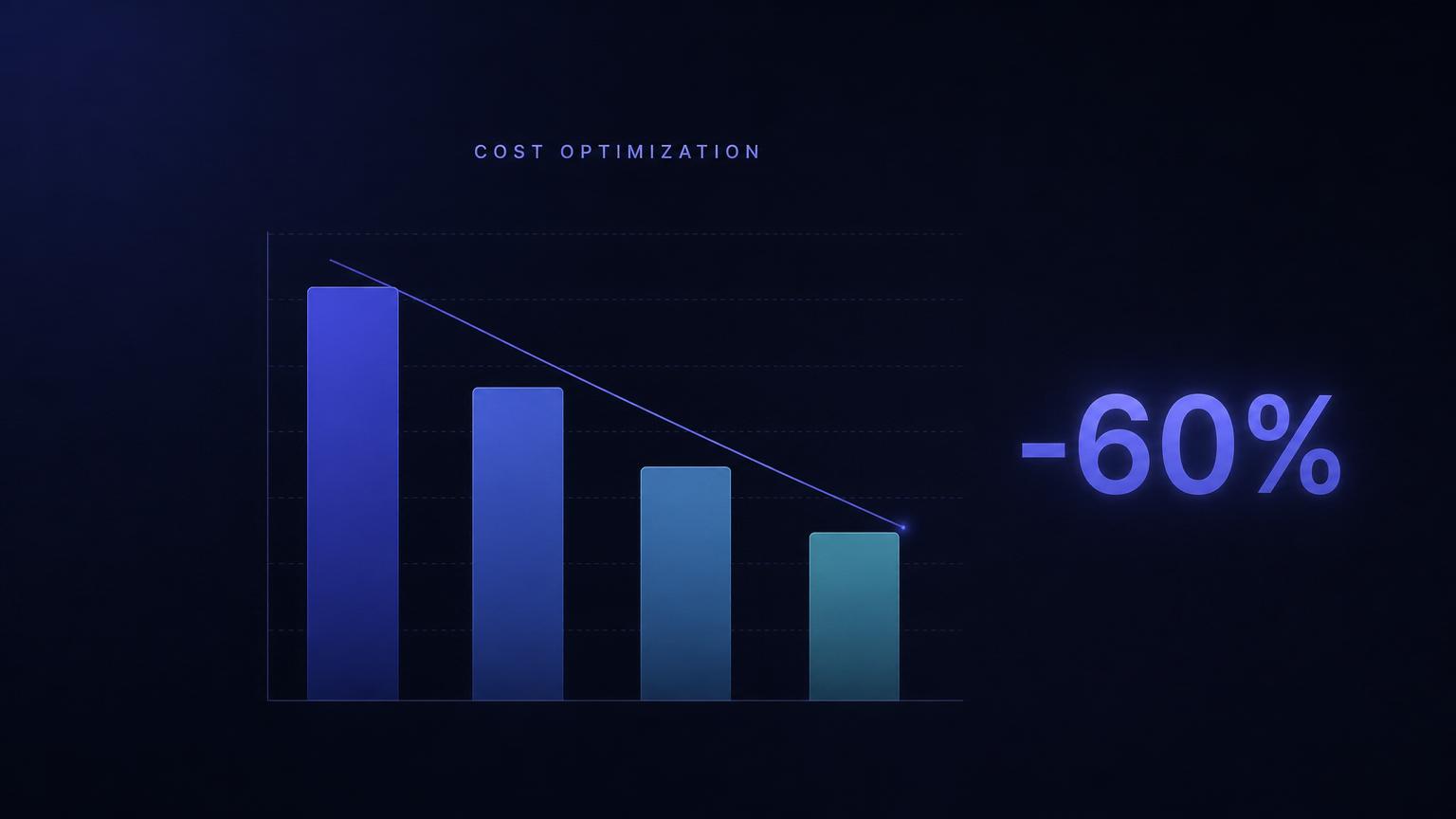
Cut your LLM bill by 60% with six compounding tactics: cascade cheap models like GPT-5.4 nano and Claude Haiku 4.5 in front of frontier tiers, cache repeated system prompts, compress prompt fat, cap max_tokens, batch non-realtime jobs at 50% off, and measure before optimizing. The rest of this post is the how — but that sentence is the whole playbook.
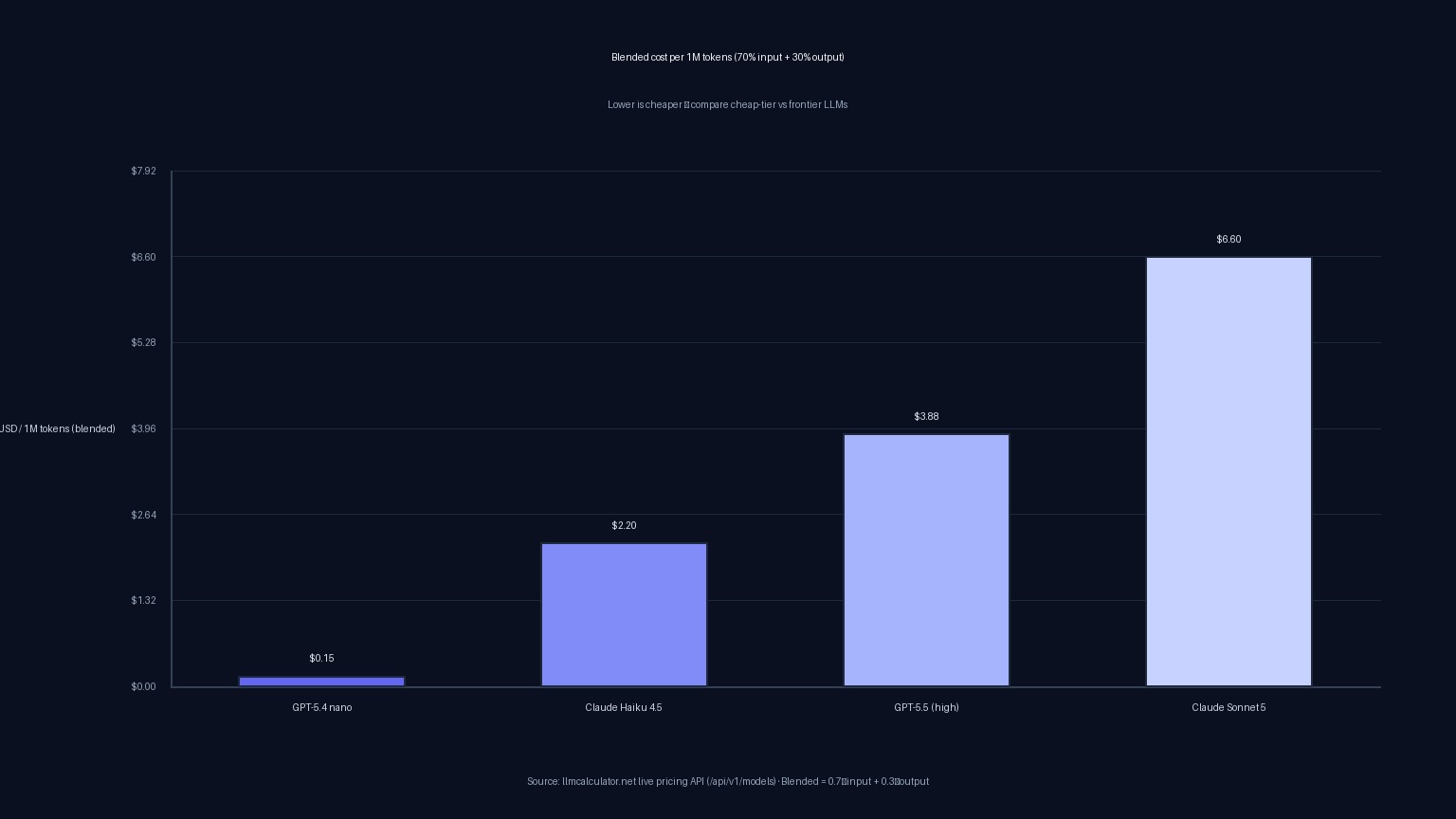
If your AI bill is growing faster than your traffic, you have a margin problem. The good news: in 2026 the cheap tier is so much cheaper than the frontier tier that a well-designed router pays for itself in a weekend. Here are the six tactics that compound.
The current cheap-tier vs frontier lineup
These are the exact prices we reference throughout the post — the cheap models you cascade from, and the frontier models you escalate to.
| Tier | Model | Input / 1M | Output / 1M |
|---|---|---|---|
| Cheap | GPT-5.4 nano | $0.05 | $0.40 |
| Cheap | Claude Haiku 4.5 | $1.00 | $5.00 |
| Frontier | GPT-5.5 (high) | $1.25 | $10.00 |
| Frontier | Claude Sonnet 5 | $3.00 | $15.00 |
Source: llmcalculator.net live pricing API (/api/v1/models), refreshed July 15, 2026.
1. Cascade your models
Send 80% of requests to a cheap model — GPT-5.4 nano at $0.05/$0.40 or Claude Haiku 4.5 at $1/$5 per 1M — and only escalate to a frontier tier like GPT-5.5 ($1.25/$10) or Claude Sonnet 5 ($3/$15) when the cheap model returns low confidence. On chat and RAG workloads this alone reliably drops blended cost 60–75% with negligible eval regressions.
2. Cache aggressively
OpenAI, Anthropic and Google all offer prompt caching for repeated system prompts. Savings: up to 90% on input tokens for the cached portion. Design prompts with the static block first so cache hits actually land.
3. Compress system prompts
Most system prompts have 30%+ fat. Cut redundant examples, collapse markdown, remove restated instructions.
4. Limit output tokens
Output tokens cost 4–8x more than input at every frontier tier. Set max_tokens aggressively and use structured outputs where possible.
5. Batch where you can
Anthropic and OpenAI batch APIs offer 50% discounts for non-realtime workloads — evals, backfills, classification jobs, offline enrichment.
6. Measure first
Use our cost calculator and token estimator to find the biggest line item, then optimize that one first.
FAQ
Does model cascading hurt output quality?
Not meaningfully, if you route on confidence rather than round-robin. The cheap tier handles the 80% of requests that are easy anyway; the frontier tier still catches the hard 20%. Teams that measure this typically see <1% eval-score delta versus routing everything to the frontier model — while cutting blended cost 60–75%.
How much can prompt caching actually save?
Up to 90% off the cached portion of input tokens. In practice, if your system prompt is 4K tokens and 1,000 users share it, your effective input bill collapses by an order of magnitude. The catch is prompt structure — the static block must sit at the top for the cache to hit.
What's the easiest tactic to implement first?
Capping max_tokens. It's a one-line change per request and hits the most expensive side of the ledger (output tokens cost 4–8x input). Do this before you touch routing or caching.
Do I need to change providers to cut costs?
No. Every tactic here works within a single provider. Cascading GPT-5.4 nano → GPT-5.5, or Claude Haiku 4.5 → Sonnet 5, gets you most of the way. Multi-provider routing is an optimization on top, not a prerequisite.
By the LLMCalculator.net Research Team · Last updated: July 15, 2026
Related reading: 2026 LLM price comparison · Cheapest LLM API 2026 · GPT-5 pricing explained · GPT-4o vs Claude Sonnet (legacy 2026 comparison).